Paid Media Testing Framework for B2B SaaS

Paid Media Testing Framework for B2B SaaS
A paid media testing framework for B2B SaaS is a structured process for isolating variables in paid ads (copy, creative, audience, offer) to find what drives qualified pipeline, not just clicks. European B2B SaaS teams that run structured testing cycles reduce wasted ad spend by 20-40% within 90 days. Without a documented methodology, you are spending budget on intuition. This guide gives you the exact steps to build a repeatable system.
What You'll Need Before Testing
Before running a single test, confirm these are in place:
- Conversion tracking verified: Every key action (demo request, trial signup, MQL form) fires correctly in Google Tag Manager and your ad platforms. Broken tracking invalidates every test.
- GDPR-compliant consent layer: A CMP (Consent Management Platform) such as Cookiebot or OneTrust must be active. Data collected without valid consent cannot be used for targeting or reporting under EU GDPR. See the EU, UK & DMA Paid Media Compliance Checklist for a full pre-launch review.
- Baseline metrics: Know your current CPL, CPA, CTR, and conversion rate by platform before changing anything. Testing without a baseline is guessing.
- Minimum budget threshold: Structural A/B tests on LinkedIn require at minimum €3,000-5,000/month per campaign to reach statistical significance within a four-week cycle. Below this, test cycles take too long to be actionable.
- A defined primary metric: Pick one. For most B2B SaaS companies, it is Cost Per SQL or Cost Per Demo Booked. Testing against multiple metrics simultaneously produces contradictory conclusions.
Step 1: Define Your Testing Hypothesis
Every test starts with a falsifiable hypothesis: "If we change X, we expect Y to improve by Z, because of A." Vague tests produce vague learnings.
A strong hypothesis looks like this: "Changing the CTA from 'Start Free Trial' to 'Book a Demo' will increase demo conversion rate by 15% among DACH-region IT decision-makers, because the audience is enterprise-buying-cycle-oriented and prefers guided evaluation."
Document each hypothesis in a shared testing log (a Google Sheet works; purpose-built tools like Notion or Airtable scale better). Include the variable being tested, the platform, the audience segment, the expected direction of change, and the reasoning. This log becomes your team's institutional memory.
Common mistake: Testing too many variables at once. If you change the headline, creative, and CTA simultaneously, you cannot attribute the result to any single change.
Step 2: Choose the Right Test Type
Not every test should be an A/B split. Match the test type to the question you are asking.
| Test Type | Best For | Minimum Spend (EU B2B) | Time to Significance | |---|---|---|---| | A/B Split (single variable) | Copy, CTA, headline | €3,000/month | 3-4 weeks | | Creative A/B | Visual format, video vs. static | €4,000/month | 3-4 weeks | | Audience Split | ICP segment, seniority, geo | €5,000/month | 4-6 weeks | | Multivariate | Landing page elements | €8,000+/month | 6-8 weeks | | Champion/Challenger | Entire ad concept vs. control | €6,000/month | 4-5 weeks |
For early-stage B2B SaaS (pre-Series A), stick to A/B splits on single variables. Multivariate testing SaaS ads requires significantly more traffic and budget to produce reliable results. Refer to the Paid Media Budget by Stage guide to confirm your testing budget is appropriately sized for your round.
For European campaigns specifically: Audience segmentation by country requires separate ad sets per geo. DACH, Nordics, and Benelux audiences respond differently to the same creative. A test that combines them produces averaged data that is actionable for no single market.
Step 3: Set Up Test Structure on Platform
Test structure determines whether your data is clean or contaminated. Follow these rules by platform:
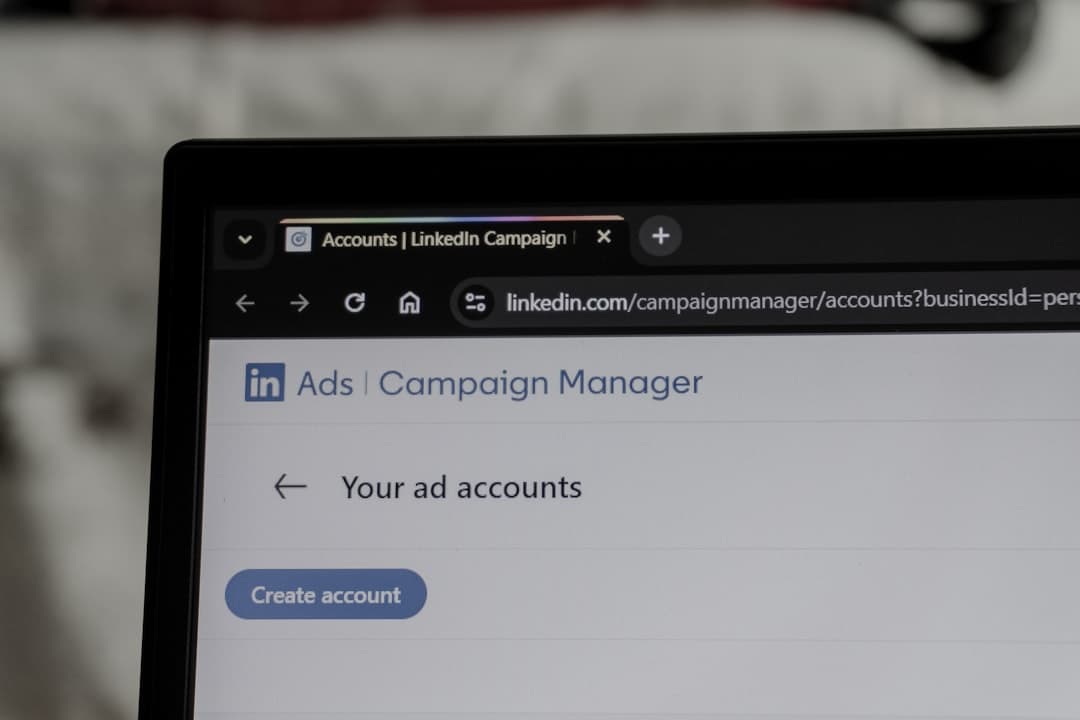
LinkedIn Campaign Manager:
- Use separate campaigns (not ad sets) to test audiences. LinkedIn's algorithm will favor one audience within a shared campaign.
- Set bid strategy to Manual CPC for testing phases to prevent the algorithm from throttling one variant.
- Enable "Rotate evenly" under ad rotation. LinkedIn defaults to optimized rotation, which skews delivery toward early-performing variants before statistical significance is reached.
Google Ads:
- Use the built-in "Experiments" feature (formerly Campaign Drafts and Experiments) for search ad tests. This splits traffic at the campaign level with a configurable traffic percentage.
- Set experiment split to 50/50. Do not start a test at 80/20 and plan to adjust it later.
- Exclude brand terms from performance ad tests. Brand queries inflate CTR and distort results.
Meta Ads (for B2B SaaS targeting):
- Use A/B Test tool in Meta Ads Manager, not duplicate ad sets. Duplicate ad sets enter the same auction and compete with each other.
- Confirm that your Meta pixel is configured with Consent Mode if running in the EU. Without this, your reported conversions will undercount by 15-30% in privacy-active markets like Germany and France.
For platform-specific conversion benchmarks and landing page setup, the CRO by Platform guide covers what good looks like on each channel.
Step 4: Determine Statistical Significance Before Reading Results
Statistical significance is the threshold at which you can trust a result is real, not random. The standard minimum is 95% confidence. Reading results before hitting this threshold causes false conclusions.
Use a significance calculator (Evan Miller's free tool or the one built into Google Ads Experiments) before declaring a winner. Input your sample size, conversion rate for each variant, and your confidence threshold.
Rule of thumb for B2B SaaS: You need a minimum of 100 conversions per variant to draw reliable conclusions from a conversion-rate test. If your monthly volume is 30 demo bookings, a four-week A/B test will not be statistically valid. In this case, test CTR at the ad level (where volume is higher) and accept that conversion-rate tests require longer cycles or higher spend.
How long should a paid media test run?
A B2B SaaS paid media test should run a minimum of two full weeks, regardless of early results. Four weeks is the standard for conversion-focused tests. Cutting tests short because one variant is "clearly winning" after five days is one of the most common and costly mistakes in ad testing methodology for startups. Early results are almost always biased by novelty effects and day-of-week variance.
Step 5: Analyze and Document Results
When a test reaches significance, record the following in your testing log:
- Winner and margin of improvement (e.g., "Variant B reduced CPL by 28%")
- Sample size and confidence level
- Audience segment and geo (a winner in the UK may not hold in Germany)
- Platform and placement
- Date range (Q4 B2B buying behavior differs from Q1)
- Hypothesis outcome: Was the prediction correct? Why or why not?
The "why" is the most valuable output. A test that confirms your hypothesis teaches you one thing. A test that contradicts it teaches you something about your buyer you did not know.
What is a good test velocity for B2B SaaS?
High-performing B2B SaaS paid media programs run two to four structured tests per month per platform. Teams that run fewer than one test per month per channel accumulate learnings too slowly to outperform competitors. Agencies running structured creative testing programs typically generate 60-80 data points per quarter, which compounds into a significant knowledge advantage within six to twelve months.
Step 6: Apply Learnings and Build Your Testing Roadmap
A single winning variant is not the goal. The goal is a testing roadmap that systematically closes the gap between your current performance and your target CPA.
After each test cycle, categorize learnings into three buckets:
- Scale immediately: Apply the winning variant across all relevant campaigns.
- Test further: The result was directional but not significant. Design a follow-up test with higher volume or a longer window.
- Audience-specific: The result only held for one segment. Maintain separate creative strategies for that segment.
Use your testing log to identify patterns across three or more tests. If "pain-point-led headlines" outperform "feature-led headlines" consistently across LinkedIn and Google, that is a signal about your ICP's decision-making stage, not just a creative preference.
How does GDPR affect A/B testing paid ads in Europe?
GDPR affects paid media A/B testing primarily through consent-based data collection. Conversion data from users who declined tracking cannot be included in test results. This reduces measurable conversion volume in markets with high consent-decline rates (Germany: 30-45% decline rate; UK post-Brexit: 20-30%). Marketers should use modeled conversions in Google Ads and Meta's Conversions API to partially recover this data, while building tests around sample sizes that account for the consent gap.
Common Mistakes in B2B Paid Media Testing
- Testing on too small a budget: Below €3,000/month, tests take 8+ weeks to reach significance. By then, the market context has changed.
- Changing the landing page mid-test: Any change to the destination URL mid-flight invalidates the test. Freeze the landing page for the duration.
- Ignoring geo segmentation: A single test across five EU markets averages out meaningful country-level differences. Segment or accept that results are directional only.
- Optimizing for CTR instead of pipeline: High CTR with low SQL conversion rate means you are attracting the wrong audience. Always tie test success to a metric one step closer to revenue.
- No documented hypothesis: Tests run without a hypothesis cannot be interpreted when results are unexpected. Documentation is not bureaucracy; it is how learnings compound.
Expected Results and Next Steps
Teams that implement a structured paid media testing framework for B2B SaaS typically see the following within 90 days: CPL reduction of 15-35%, improved audience targeting precision, and a documented creative library of winning and losing variants that informs future campaigns.
The next step after establishing your testing cadence is tightening your attribution model so that test results connect directly to pipeline and revenue. The Paid Media Attribution Models for Startups guide covers how to set up multi-touch attribution that maps ad testing outcomes to closed deals.
If you want a testing framework built and run by practitioners who have done this across European B2B SaaS accounts, talk to the GoScale Media team about what a structured testing program looks like for your stage and budget.
Key Takeaways
- One variable per test: Isolate the change or you cannot interpret the result.
- 95% confidence, 100+ conversions per variant: These are non-negotiable thresholds for B2B conversion tests.
- GDPR reduces measurable volume: Build this into your sample size calculations. Germany and France will show 20-45% fewer trackable conversions.
- Document every test: The compounding value is in the pattern recognition across 20+ tests, not any single result.
- Segment by geo for EU campaigns: DACH, Nordics, and UK audiences behave differently enough to warrant separate test conclusions.
- Test velocity matters: Two to four tests per platform per month separates high-performing programs from stagnant ones.
Digital marketing, run by real strategists
Book a growth call and see how we can scale your paid media, directly or white-label for your agency.
Book a growth callRelated Articles
CRO by Platform: Meta, Google, LinkedIn, TikTok
Platform-specific CRO tactics for paid ads in 2025. Benchmarks, landing page frameworks, and optimization hacks for Meta, Google, LinkedIn, and TikTok.

Paid Media Attribution Models for Startups
Compare attribution models for startup paid ads. Learn first-click, last-touch, linear & time-decay to measure ROI accurately.

Paid Media Budget by Stage: Pre-Seed to Series B
Allocate paid ads spend by startup stage. Real budget templates for Meta, Google, LinkedIn from pre-seed to Series B. Updated 2025.